Stop posting on LinkedIn. Start publishing
Melanie Goodman on building lasting authority on LinkedIn
LinkedIn is steadily evolving into a professional publishing environment. The professionals who recognise that shift are beginning to separate themselves from those who simply “stay active.”

photo / Video: AI generated, Freepik
A standard LinkedIn post is transient by design. It appears in feeds, gathers engagement for a short window, and then recedes into the archive. There is nothing inherently wrong with that. Posts build familiarity. They signal activity. They keep you visible.
But familiarity is not authority.
Authority accumulates. It is built through consistency of thought, depth of explanation, and content that people return to. It is reinforced when a colleague forwards your work internally, when a prospect references something you wrote months ago, or when your name appears in search results alongside substantive analysis.
Posts rarely achieve that effect yet publishing can.
There is also a structural advantage at play: Long-form creators remain a minority on LinkedIn. The platform continues to prioritise content that drives dwell time and meaningful engagement. In practical terms, that creates space for professionals prepared to contribute more than brief commentary.
This is not about weight, not volume.
Document posts: structured authority in the feed
The Document post — a PDF or slide deck uploaded directly into LinkedIn — is the most accessible entry point into publishing. It allows readers to scroll through structured content without leaving the platform, increasing dwell time and, by extension, distribution.
For regulated professionals, this format is particularly powerful. It enables you to explain rather than merely state. A solicitor might break down a regulatory development in plain English. A financial adviser might outline the five pension decisions worth reviewing before the end of the tax year. A compliance leader might dismantle a persistent industry misconception.
Unlike short posts, Document posts provide sufficient space for clarity and structure and because readers can save them, they retain value beyond the initial engagement window.
How to create a document post inside LinkedIn
The execution matters as much as the idea.
Begin outside LinkedIn. Open PowerPoint, Keynote, Canva, or Google Slides and create a simple, clean deck in portrait orientation so it reads well on mobile. Aim for six to ten slides. The first slide must function as a headline, not a title page. It should clearly state who the content is for and why it matters now. Specificity is strength. “Five pension decisions to review before 5 April if you earn over £150k” will outperform a vague “April tax update” every time.
Each subsequent slide should carry one core idea only. Use short sentences. Large fonts. Generous spacing. Avoid decorative clutter. This is not a design exercise; it is a clarity exercise.
Conclude with direction: Your final slide should tell the reader what to do next - follow for regular briefings, subscribe to your Newsletter, comment for a deeper guide.
A Document that simply ends is an opportunity wasted.
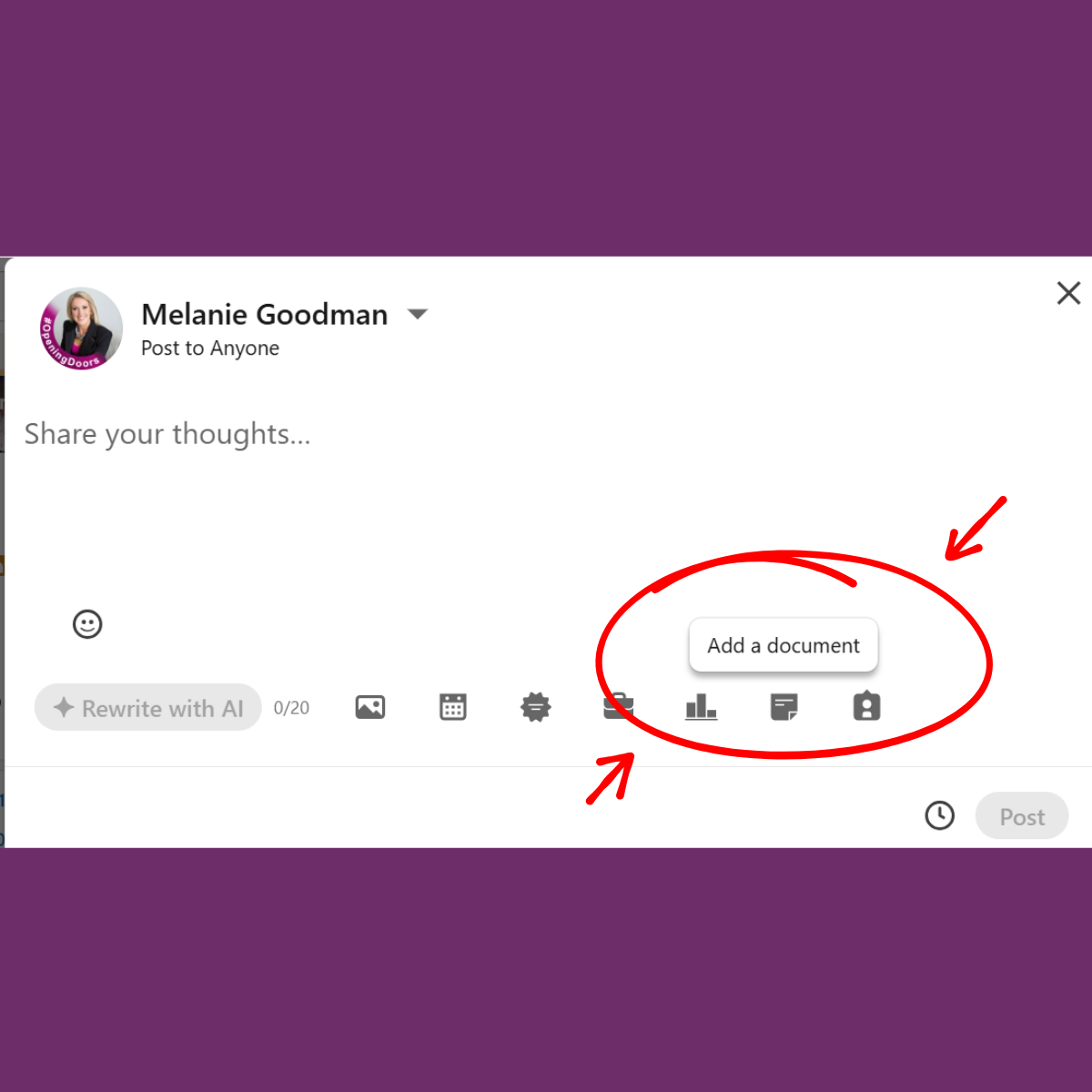
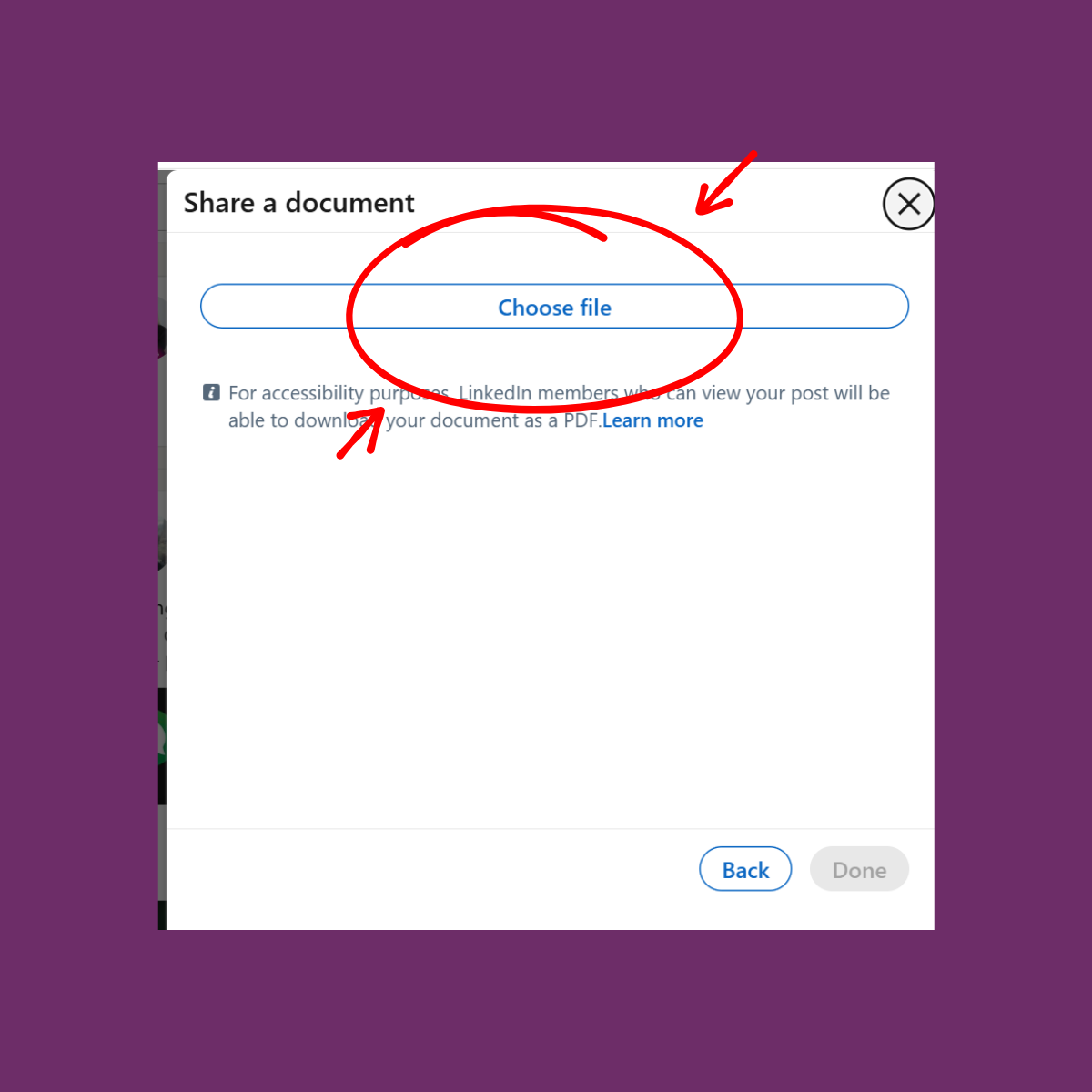
Once the deck is complete, export it as a PDF. Then, inside LinkedIn, click “Start a post,” select the Document icon, upload the file, and add a strong document title that reinforces the benefit. This title appears above the preview, so it must carry weight.
The caption should not duplicate the slides. Instead, explain who the document is for, why the issue is timely, and why the reader should care. Then publish — and respond to every thoughtful comment. Engagement compounds distribution.
Done properly, a Document post becomes a structured briefing inside the feed. It is no longer “content” but a professional communication.
Newsletters: from visibility to relationship
LinkedIn Newsletters occupy a distinct strategic position. When someone subscribes, they receive email notifications every time you publish a new edition. You are no longer wholly dependent on the algorithm deciding whether your audience sees your work that day.
That structural difference matters.
A Newsletter works best when it is defined and focused. Not a collection of passing thoughts, but a recurring series anchored in a clear subject and aimed at a specific audience.
eg. An employment lawyer publishing a fortnightly briefing for SME leaders. A wealth manager offering a monthly commentary on tax planning for business owners. A compliance specialist analysing regulatory shifts affecting financial firms.
Specificity attracts subscriptions. Consistency sustains them.
How to create a LinkedIn newsletter
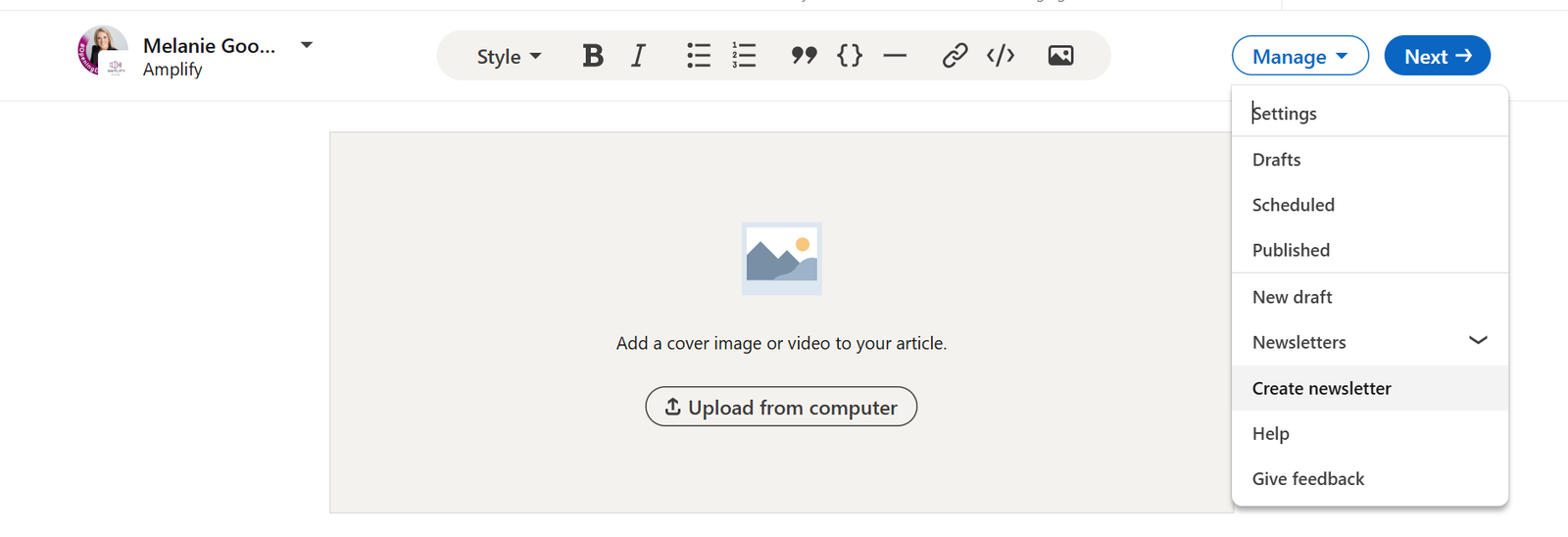
If you have not yet launched one, begin by clicking “Write article” at the top of LinkedIn and selecting “Create a Newsletter.”from the drop down. Name it clearly and descriptively, avoiding vague titles. The name should immediately communicate who it is for and what problem it addresses.
Write a concise description that reinforces that positioning. This is not branding theatre!
When drafting each edition inside LinkedIn’s article editor, use a repeatable structure. Open by explaining why the issue matters now. Then move into what has changed or what is misunderstood. Follow with practical implications. Conclude with what professionals should do in response.
Format with care. Use subheadings to guide the reader. Keep paragraphs controlled. Avoid academic density. Readers engaging with Newsletters expect depth, but they are time-poor 🕰️
Once published, LinkedIn automatically notifies your subscribers. To extend reach, create a separate standard post that summarises the key insight and links to the Newsletter. This bridges visibility and subscription.
Choose a realistic cadence for your own schedule- fortnightly or monthly is sufficient for most senior professionals - and keep it. Reliability builds trust faster than intensity.
Articles: the permanent record of your thinking
Articles are often confused with Newsletters but they serve a different purpose. A Newsletter is recurring and relationship-driven. An Article is evergreen and portfolio-driven.
Articles live permanently on your profile. They are indexed by search engines. Over time, they accumulate into a visible body of work.
For senior professionals in regulated industries, that permanence carries weight. A partner who has published a dozen rigorous Articles on a specialist topic demonstrates intellectual continuity. A financial adviser who has written consistently about retirement planning frameworks shows disciplined thinking that short posts cannot convey.
The easiest place to start is your own client work. Pay attention to the questions you are asked repeatedly. If three different clients have asked you the same thing in the past six months, that question deserves an Article. It means the confusion is widespread, the stakes are real, and you already know the answer well enough to explain it without preparation. That is a strong foundation.
Your own professional frustrations are equally useful. When you read something in your field and think “that is wrong” or “that is missing the point entirely”, write that down. Disagreement is one of the most reliable signals that you have a genuine perspective worth sharing. An Article that challenges a commonly held assumption will hold its value far longer than one that simply confirms what everyone already believes.
Look also at the conversations you have had that surprised you. A client who misunderstood something fundamental. A peer who held an assumption you had never thought to question. A meeting where the room went quiet after you said something that felt obvious to you. Those moments of friction or surprise are almost always worth unpacking in writing, because if it surprised you, it will almost certainly be new to someone reading your profile.
Finally, revisit your own older work - presentations, reports, advice emails, CPD notes. Most senior professionals are sitting on years of considered thinking they have never published. An Article does not need to be written from scratch. It needs to surface something you already know, in a form that a stranger can read and learn from.
How to publish a strong LinkedIn article
To create one, click “Write article” and draft a standalone piece rather than attaching it to your Newsletter.
Choose themes that will matter in three years’ time, not only this week. Think in terms of frameworks, principles, and strategic analysis rather than commentary.
Lead with your strongest insight. Do not warm up for five paragraphs. If your central argument is that most business owners misunderstand inheritance tax because they focus on the rate rather than the structure, say so clearly at the beginning. Then build your case.
Use clear subheadings. Keep the prose precise. End with application.
What should the reader do differently as a result of this analysis? Authority lies not in abstraction but in usable thinking.
Over time, build a coherent library around your core specialism. Six to twelve well-argued Articles in a defined niche transform your profile from a feed participant into a thought leader.
From tactics to system
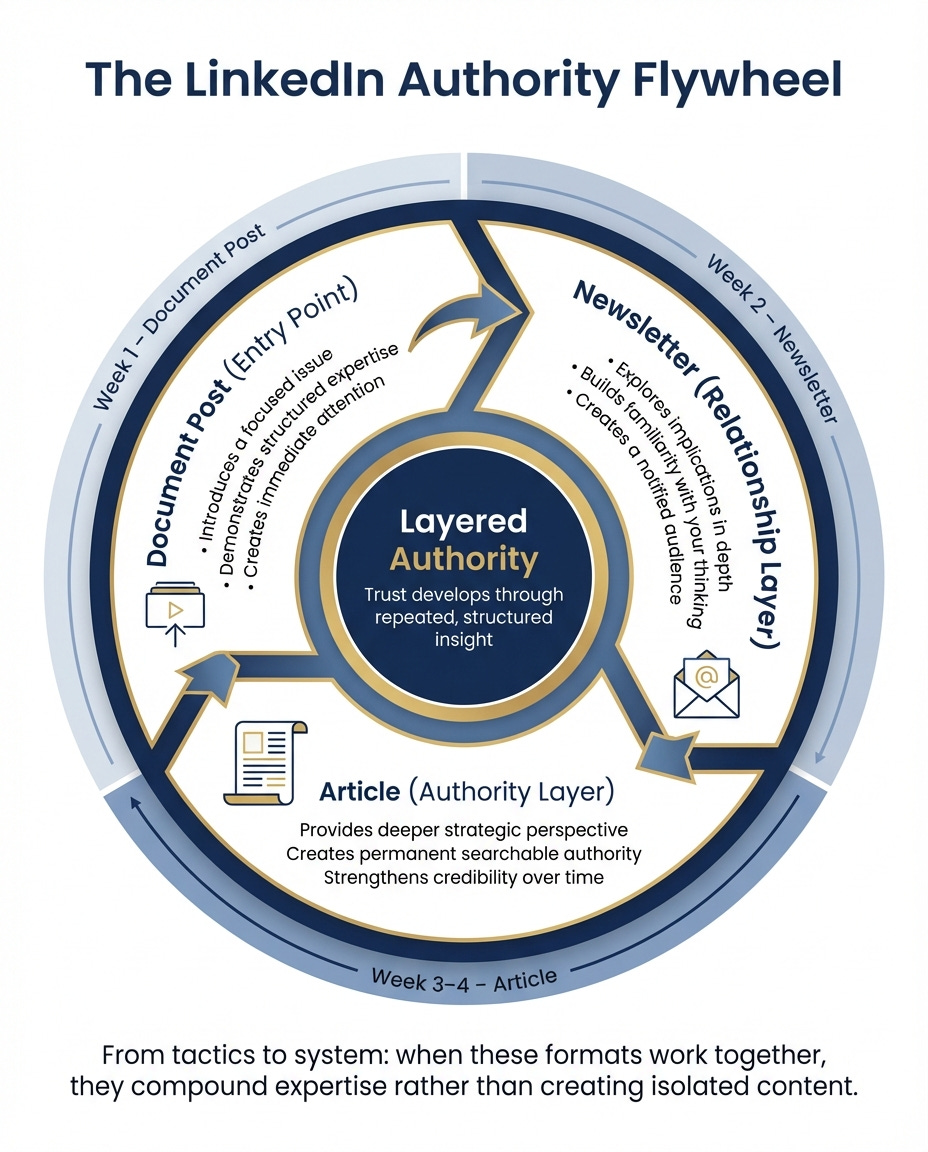
Individually, Document posts, Newsletters, and Articles are useful. Together, they form a system aligned with how trust develops.
A Document post introduces a focused issue and demonstrates structured expertise. A Newsletter develops the relationship and builds a notified audience. An Article establishes permanence and searchable authority.
In practical terms, a rhythm might look like this:
In the first week, you publish a Document post explaining a change in inheritance tax planning rules. In the second, you publish a Newsletter examining the implications for a specific client segment. In the third or fourth week, you release an Article taking a broader strategic view of estate planning in light of that change.
By the end of that cycle, you have not produced isolated content. You have built layered authority.
What to measure and what to resist
If you are to invest time in publishing, evaluate the right signals. Document saves indicate perceived value. Newsletter subscriber growth reflects trust. Article views over time reveal durability.
The most common mistakes remain predictable: publishing sporadically and then concluding it “doesn’t work”; writing content so broad it resonates with no one in particular; ending every piece with a vague invitation; hedging language to such an extent that nothing of value is actually said.
Compliance and clarity are not opposites. It is entirely possible to remain within regulatory boundaries while articulating a firm, informed perspective. In fact, the professionals who command authority in the coming years will be those who do precisely that.
Begin with one format you are not currently using. Commit to a small series - three Documents, three Newsletter editions, or two substantial Articles - before evaluating effectiveness.
Be honest about whether your work is genuinely useful to the audience you intend to serve, or merely reassuring for you to produce.
LinkedIn increasingly rewards substance. It is indifferent to noise.
Most professionals will continue posting.
A smaller group will begin publishing.
Over time, that difference compounds.

Melanie Goodman (Website) is a decorated digital strategist whose career trajectory from high-stakes corporate law to social media consultancy has made her a preeminent voice in professional branding. After qualifying at the elite "Magic Circle" firm Allen & Overy LLP, Goodman relocated to Switzerland in 2005, where she spent nearly a decade pivoting into business development and marketing for international legal and financial giants. This unique synthesis of legal precision and creative growth strategy has earned her four prestigious Citywealth awards and established her as a specialist in LinkedIn training and employee advocacy. Today, she bridges the gap between compliance and charisma, advising both boutique firms and multinational corporations on how to navigate the digital landscape with a bespoke, client-centric approach that prioritizes meaningful engagement over mere visibility.